Mattress Materials & Sleep Technology
Choosing an Organic Mattress: Materials, Certifications, and Coil Design
An organic label can point toward carefully sourced fibers, but it does not tell the whole story. To understand what is inside a mattress, trace each material from the cover to the support core, check which claims are independently certified, and consider how the coil system shapes the feel beneath you.
Published October 15, 2026
A mattress is a small landscape of materials layered in close quarters: fabric against the skin, cushioning beneath it, and a support structure that carries the body through the night. In an organic mattress, each layer may have a different origin and a different standard behind it. Cotton in the cover could be certified organic, while the foam, thread, adhesive, or fire barrier follows another specification—or is not certified at all.
That complexity is why the word organic is a starting point, not a complete description. A useful comparison asks what the term applies to, who verified the claim, and how the mattress is constructed. For an organic innerspring mattress, that inquiry also reaches into the coil unit: its arrangement, count, shape, and relationship to the cushioning layers all help determine how the bed responds.
These details matter for more than labels. They help shoppers compare products honestly, anticipate feel and care needs, and distinguish a documented material claim from broad marketing language. The most useful approach is to examine a mattress layer by layer, then consider the whole sleeping system.
Begin with the material map
Before comparing certifications, find a complete description of the mattress’s components. A transparent materials list should identify the cover, quilting, comfort layers, support core, fire barrier, and any adhesives or other bonding methods. Some manufacturers publish precise layer details; others provide only general categories such as “natural comfort layer.” If information is missing, ask what the material is and where it appears in the construction.
The cover is the first layer a sleeper encounters. It may be woven from cotton, wool, or a blend, and may include quilting that changes the surface feel. Organic cotton can be relevant for people seeking certified agricultural fiber, while wool is often used in quilting or as part of a fire-barrier design. However, naming a fiber does not establish its origin, processing standard, or certification. Look for the exact material and the scope of any claim.
Below the cover, comfort layers influence cushioning and pressure distribution. They may include cotton batting, wool, natural latex, synthetic foam, or combinations of these. “Natural latex” describes a material source, but it does not automatically mean that every component is organic. Similarly, “plant-based” foam may still contain other ingredients. Ask for the composition and the share of the layer represented by any claimed natural or certified material.
Finally, identify the support core. In an innerspring design, this is generally a system of metal coils, sometimes surrounded or separated by foam, fabric, or other materials. The coil unit can be paired with natural-fiber upholstery, latex, or conventional foam. A mattress can therefore have organic textiles in selected layers without the entire product being an organic mattress in a comprehensive sense.
Understand what certifications do—and do not—say
Third-party certification can make material claims easier to evaluate, but certifications are not interchangeable. Each program has its own scope, criteria, and chain-of-custody rules. One may address whether a fiber was grown and processed under an organic textile standard; another may assess emissions or chemical restrictions. A certificate for one component does not automatically certify the entire mattress.
When a product page names a certification, look for the organization, the certified product or facility, and a current certificate or searchable record when available. Check whether the certificate applies to the finished mattress, a particular fabric, a filling, or a manufacturing operation. The distinction is important: “made with certified organic cotton” is a narrower statement than “the mattress is certified organic.”
Certifications can also have different purposes. A textile standard may govern the handling and processing of fibers, while an emissions program may test for certain substances released into indoor air. Neither claim should be stretched beyond its stated criteria. A certification is useful evidence about the features it evaluates; it is not a universal guarantee of health outcomes, durability, comfort, or environmental impact.
Consumers can ask manufacturers for documentation in plain language. Which layers are certified? What percentage of a blended layer is covered by the claim? Does the certification cover the finished product or only the raw material? How is the fire barrier achieved? Are adhesives used, and if so, where? Clear answers make comparison possible without requiring shoppers to interpret vague phrases such as “eco-friendly,” “chemical-free,” or “all natural” as proof of a specific standard.
- Verify the exact scope: A certification may apply to a fabric, filling, or facility rather than the whole mattress.
- Separate different claims: Organic sourcing, low emissions, and restricted substances are distinct topics.
- Look for documentation: A certificate number, current listing, or detailed material statement is more informative than a logo alone.
- Read the exclusions: Blends and processing aids may be treated differently from the primary fiber.
Follow the layers from surface to core
Cover and quilting
A cover contributes to touch, airflow, and day-to-day care. Cotton can feel smooth and breathable, while a quilted layer may add softness before the sleeper reaches the main comfort materials. Wool is sometimes incorporated into quilting, where it can help manage moisture and may form part of a mattress’s fire-safety strategy. These functions depend on construction, density, and the rest of the mattress; a fiber name alone cannot predict the complete sleep experience.
Ask whether the cover is removable or intended to remain in place. A zippered cover is not necessarily designed for home laundering. Many mattress covers should not be removed because doing so can affect fire-barrier compliance or warranty coverage. Follow the manufacturer’s care instructions rather than assuming that natural fibers can be washed like ordinary bedding.
Comfort materials
Comfort layers soften the transition between the cover and support core. Natural latex is resilient and can contour while retaining a buoyant feel; cotton and wool batting tend to behave differently, compressing and recovering according to their construction. Foam density, latex formulation, layer thickness, and quilting all influence how a mattress feels. The phrase “organic mattress materials” should therefore lead to questions about the ingredients and structure of each layer—not simply a tally of natural-sounding names.
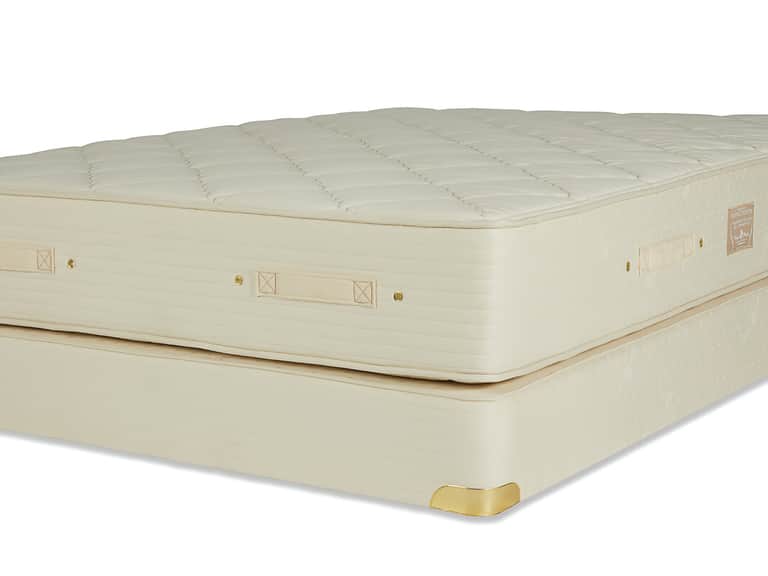
For example, the Royal-Pedic Natural Latex Quilt-top Mattress is described as having a natural latex core, cotton covering, and French wool. Those details make it a useful example of how several materials can work together in a mattress. They do not, by themselves, establish that the entire mattress is certified organic. Shoppers interested in certification should verify the relevant documentation and the exact scope of any claim directly with the manufacturer.
Support core and barriers
An innerspring core is typically steel, though coil shape and connection methods vary. A mattress may also use a perimeter reinforcement, fabric encasement, or other edge-support elements. Fire barriers are another important part of the material map. They may use wool, treated fibers, or other tested constructions. Ask what the barrier is made from and how it is integrated, especially if a product page emphasizes the absence of particular substances.
Coil design: the structure beneath the surface
Coils are not a single, uniform technology. Their arrangement and geometry affect how support is distributed, how much motion moves across the bed, and how the mattress responds when pressure shifts from one area to another. The experience also depends on the comfort layers above the coils and the foundation beneath the mattress.
Pocket coils are individually wrapped, allowing each spring to compress more independently than coils linked into a single network. They are commonly selected for localized response and reduced motion transfer, although the degree of either effect varies with the full construction. Bonnell coils have an hourglass shape and are interconnected, creating a more linked response. Offset coils use a modified shape and can be hinged together to provide a connected, conforming feel. Continuous-coil systems form multiple springs from a continuous wire structure, which can create a different balance of support and movement.
Coil count is often prominent in product descriptions, but it is not a stand-alone measure of quality. Counts may be reported for different mattress sizes, and individual designs may define a coil unit differently. A higher number does not automatically mean better comfort, longer life, or stronger support. Ask about coil type, layout, wire gauge if disclosed, zoning, edge construction, and how the upholstery layers interact with the spring unit.
Wire gauge refers to the thickness of the wire, with gauge numbering conventions that can be counterintuitive. The practical question is not simply whether the wire is “thick” or “thin,” but how the coil system is designed for its intended purpose and how the complete mattress performs. Zoning, where different areas are designed to respond differently, may be achieved through coil changes, layer changes, or both. The label “zoned” is most useful when the manufacturer explains what varies and where.
For an organic innerspring mattress, coil design and organic certification are separate parts of the assessment. Steel coils do not become organic because the surrounding upholstery is certified, and certified cotton does not determine the feel of the coil unit. Evaluate each claim on its own terms, then consider how the materials combine.
Match construction to comfort and support
There is no universally correct coil configuration or firmness level. Body shape, preferred sleeping position, movement during the night, and individual comfort preferences all affect how a mattress feels. Side sleepers often pay attention to pressure at the shoulders and hips; back and stomach sleepers may prioritize a surface that feels supportive without uncomfortable sinking. These are starting points for testing, not rules that can predict every person’s experience.
When testing a mattress, spend enough time in your usual sleeping positions to notice whether the surface feels balanced. Consider whether the shoulders and hips settle comfortably, whether the lower back feels supported, and whether changing positions is easy. If sharing a bed, assess motion and usable space on both sides. A mattress’s material and certification profile cannot tell you whether its firmness will suit your body.
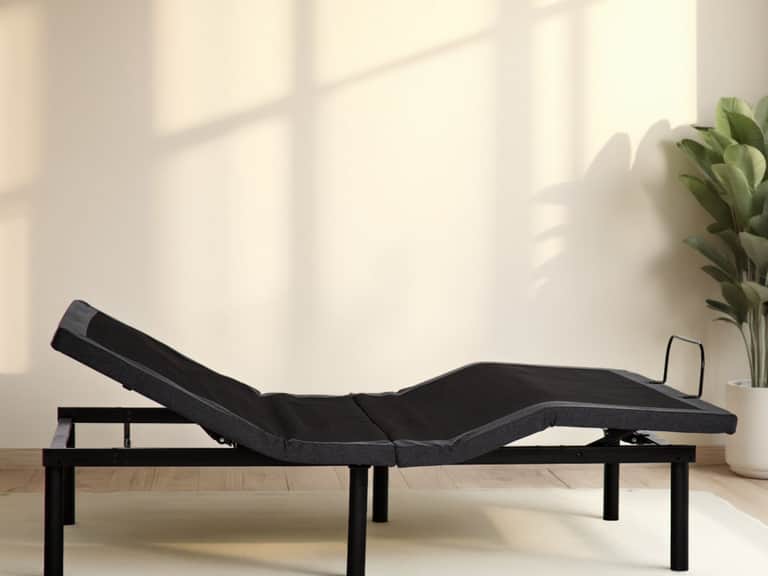
Also consider the foundation. A coil mattress may require a compatible platform, slatted base, or foundation with specific spacing and support. A base that flexes differently—or lacks adequate center support—can affect how the mattress performs and may influence warranty coverage. Adjustable-base compatibility should be confirmed for the exact mattress model rather than inferred from the presence of coils or latex.
Care, longevity, and the whole bed
Mattress care begins with the manufacturer’s instructions. Some designs can be rotated from head to foot; others are not intended to be flipped because their comfort layers are arranged on one side. Using a breathable mattress protector can help guard against spills and everyday soiling, but ensure that it fits securely and does not interfere with the feel you want. Sheets and bedding also contribute to the sleep environment, particularly when breathability and easy washing matter.
Ask about the warranty, trial period, return conditions, and expected maintenance before purchasing. A warranty usually addresses defined manufacturing defects, not every change in comfort or appearance. Natural fibers and foams may compress with use, and the rate depends on material, construction, use, and care. Rather than relying on a broad promise of long life, compare the specific warranty terms and the company’s guidance for normal wear.
Care is especially important for pillows and toppers, which are not interchangeable with mattress components. For example, a removable protector may be washable even when a pillow or mattress itself is spot-clean only. Treat each item according to its label. A clean, well-maintained sleep setup is built from compatible layers, not from the mattress alone.
A practical checklist before you buy
Use the following questions to turn product descriptions into comparable facts:
- What materials are used in the cover, quilting, comfort layers, support core, and fire barrier?
- Which materials are certified, and does the certification apply to the component or the finished mattress?
- Can the manufacturer provide current documentation or explain how to verify the claim?
- Is the mattress made with latex, foam, cotton, wool, steel coils, or blends—and in what layers?
- What type of coil system is used, and how are the coils arranged or zoned?
- How does the brand describe edge support, motion transfer, and compatibility with different foundations?
- Are adhesives used, and what is disclosed about their location or composition?
- What care is permitted, and are rotation, flipping, or a protector recommended?
- What are the trial, return, delivery, and warranty terms?
Read the whole construction, not just the headline
Choosing among organic mattresses is an exercise in careful reading. The strongest product description does more than repeat the word “organic”: it identifies materials, names the layers, explains the support system, and gives a clear account of what any certification covers. When details are unavailable, asking for them is part of responsible comparison.
Coil design adds another dimension. Pocketed, interconnected, and continuous systems each create a different structural response, but none can be judged in isolation from upholstery, edge support, the foundation, and the sleeper. A mattress that makes sense on paper must still feel right in practice.
Think of the bed as a layered environment, not a single label. Trace its materials from the surface inward, verify claims at the level where they apply, and weigh construction against comfort and care. That approach makes it easier to choose a mattress that aligns with both your priorities and the realities of how you sleep.